
Introduction
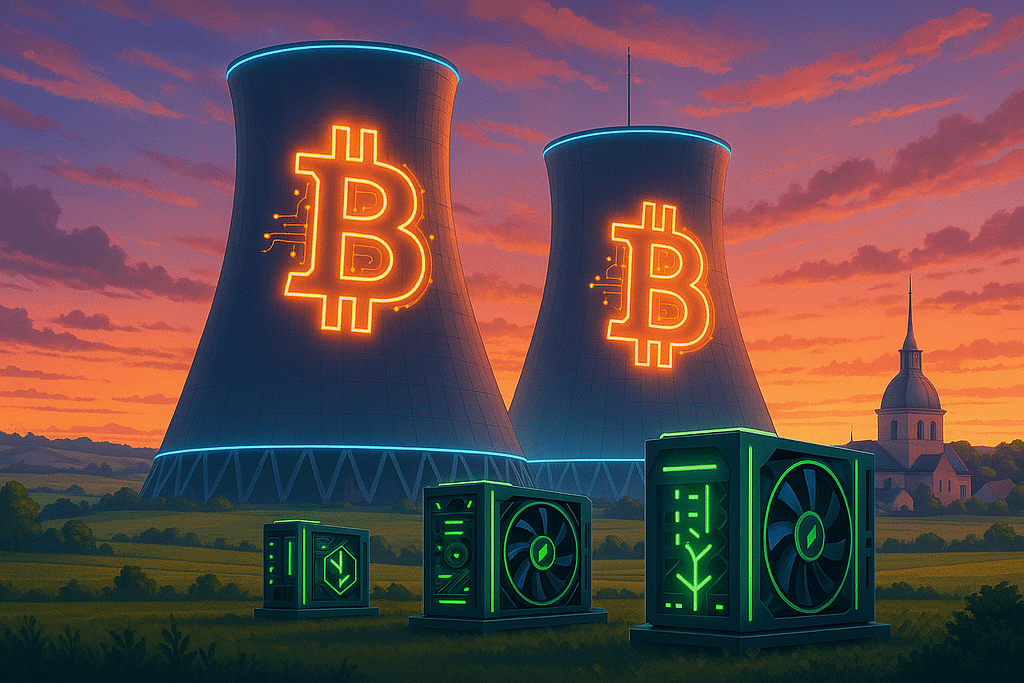
Bitcoin mining, once a niche activity for tech enthusiasts, has grown into a global industry that bridges technology, finance, and energy. In France, a groundbreaking proposal aims to harness surplus nuclear power for Bitcoin mining, potentially generating up to $150 million in annual revenue. This initiative, reported by CryptoSlate on July 17, 2025, positions France as a pioneer in integrating cryptocurrency mining with sustainable energy practices. By utilizing excess energy from its nuclear power plants, France seeks to monetize wasted resources while advancing its position in the global crypto landscape. This article explores the mechanics of France’s plan, its economic and environmental implications, the challenges ahead, and how investors and enthusiasts can capitalize on this emerging trend.
Understanding Bitcoin Mining
Bitcoin mining is the process of validating transactions on the Bitcoin blockchain by solving complex mathematical puzzles using specialized hardware. Miners are rewarded with newly minted Bitcoin (BTC) and transaction fees, but the process demands significant computational power and electricity. As of July 2025, Bitcoin’s global mining network consumes approximately 150 terawatt-hours annually, equivalent to the energy usage of a mid-sized country (per Cambridge Bitcoin Electricity Consumption Index). This energy intensity has sparked debates about sustainability, making France’s proposal particularly noteworthy.
Why Energy Matters in Mining
- High Energy Costs: Mining profitability depends heavily on electricity costs, which can account for 60-80% of operational expenses.
- Environmental Impact: Mining operations using fossil fuels contribute to carbon emissions, prompting a shift toward greener energy sources.
- Scalability: Countries with abundant, low-cost energy have a competitive edge in attracting large-scale mining operations.
France’s Unique Position
France is one of the world’s largest producers of nuclear energy, generating about 70% of its electricity from nuclear power plants (per World Nuclear Association, 2025). These plants produce consistent energy, but during periods of low demand—such as nights or weekends—surplus energy is often sold at a loss or wasted. According to CryptoSlate, French lawmakers see Bitcoin mining as a solution to monetize this excess capacity, with a potential revenue stream of $100-150 million per year from just one gigawatt of power.
The Proposal: A 5-Year Pilot Program
On July 11, 2025, the French National Assembly introduced a bill for a five-year pilot program to integrate Bitcoin mining into the nation’s energy strategy. Key components include:
- Strategic Infrastructure: Mining facilities will be established near nuclear plants, utilizing existing or decommissioned sites to minimize setup costs.
- Dynamic Operations: Mining operations will activate only during periods of surplus energy, ensuring no disruption to consumer electricity supply.
- Heat Recovery Systems: The heat generated by mining rigs will be repurposed for district heating, agricultural greenhouses, or industrial processes, following successful models in Finland and Sweden.
- Public-Private Partnerships: The program encourages collaboration between energy providers, tech companies, and crypto firms to optimize efficiency.
This initiative aligns with France’s broader goals of energy efficiency and economic innovation, positioning the country as a leader in sustainable crypto mining.
Global Context and Case Studies
France’s approach is part of a global trend where countries leverage surplus or renewable energy for Bitcoin mining. Notable examples include:
- Pakistan: Utilizes hydropower for mining, reducing costs and environmental impact.
- Belarus: Operates state-backed mining farms using nuclear and gas energy.
- Texas, USA: Attracts miners with abundant wind and solar energy, coupled with a deregulated energy market.
- Finland: Repurposes mining heat for district heating, cutting energy waste by 30% in some projects (per Nordic Energy Research, 2025).
These case studies demonstrate the feasibility of France’s plan and highlight the growing synergy between energy management and cryptocurrency.
Economic and Environmental Benefits
France’s Bitcoin mining initiative offers a range of benefits, both immediate and long-term:
Economic Advantages
- Revenue Generation: By monetizing surplus energy, France can offset the high fixed costs of nuclear plant maintenance, estimated at $10 billion annually (per EDF, 2025).
- Job Creation: Mining facilities will create jobs in construction, IT, and energy management, boosting local economies near nuclear plants.
- Global Competitiveness: Attracting crypto firms strengthens France’s position in the $2 trillion crypto market (per CoinMarketCap, July 2025).
- Tax Revenue: Mining profits and related economic activity could generate significant tax income for the government.
Environmental Benefits
- Low-Carbon Mining: Nuclear energy produces minimal carbon emissions, aligning with France’s climate goals under the Paris Agreement.
- Energy Efficiency: Utilizing surplus energy prevents waste, improving the overall efficiency of the national grid.
- Heat Recycling: Repurposing mining heat for heating or agriculture supports sustainable development, potentially reducing urban energy costs by 10-15% in targeted areas.
Challenges and Risks
While promising, the initiative faces several hurdles:
- Regulatory Uncertainty: The EU’s evolving crypto regulations, such as MiCA (Markets in Crypto-Assets), may impose strict compliance requirements, increasing costs.
- Public Perception: Environmental groups may criticize mining due to its energy-intensive reputation, despite the use of nuclear power.
- Market Volatility: Bitcoin’s price, hovering at $65,000 in July 2025 (per CoinGecko), is volatile, affecting mining profitability.
- Technical Challenges: Scaling mining operations without disrupting grid stability requires advanced load-balancing technology.
Mitigating Risks
To address these challenges, France could:
- Implement transparent reporting to build public trust.
- Partner with experienced mining firms to optimize operations.
- Use dynamic pricing models to adjust mining activity based on Bitcoin’s market value.
How Investors Can Capitalize
The French initiative opens opportunities for investors and crypto enthusiasts. Here’s how you can get involved:
1. Invest in Mining Companies
Publicly traded mining companies like Bit Origin, which raised $500 million for a Dogecoin treasury (per Decrypt, July 17, 2025), are expanding globally. Investing in such firms provides exposure to the mining sector without managing hardware.
2. Explore Cloud Mining
Cloud mining platforms allow users to rent hash power without owning equipment. While platforms advertising XRP cloud mining (per Cointelegraph) are risky, reputable providers like Genesis Mining or NiceHash offer safer options for Bitcoin mining. Expect 5-10% annual returns, depending on energy costs and Bitcoin prices.
3. Hold Bitcoin
With Bitcoin’s price expected to climb to $80,000-$100,000 by Q4 2025 (per Mikybull Crypto), holding BTC directly is a straightforward way to benefit from mining-driven demand.
4. Monitor Energy-Crypto Projects
Track similar initiatives in countries like Canada or Iceland, which are also exploring renewable energy for mining. Early investments in related startups could yield high returns.
Practical Steps for Beginners
- Learn the Basics: Use resources like cryptofeedhub.com to understand mining hardware (e.g., ASICs) and energy requirements.
- Join a Mining Pool: Pools like Slush Pool or F2Pool reduce risk by sharing rewards among participants.
- Assess Costs: Calculate electricity and hardware costs to ensure profitability. In France, industrial electricity rates average $0.10/kWh (per Eurostat).
- Diversify Investments: Combine mining with DeFi or ETF investments, such as Ethereum ETFs, for a balanced portfolio.
The Future of Bitcoin Mining in France
France’s pilot program could serve as a model for other nations with surplus energy. If successful, it may expand beyond the five-year trial, integrating mining into the national energy strategy. Potential developments include:
- Scaling Operations: Expanding to multiple gigawatts of power, potentially generating $1 billion annually.
- Technological Innovation: Developing AI-driven mining algorithms to optimize energy use.
- Global Partnerships: Collaborating with crypto hubs like Dubai or Singapore to attract investment.
Broader Implications for Crypto
The French initiative reflects a broader trend of governments embracing cryptocurrencies as economic tools. By aligning mining with sustainable energy, France is addressing environmental concerns while capitalizing on the crypto boom. This could encourage other nations to adopt similar strategies, further legitimizing Bitcoin in global markets.
Conclusion
France’s plan to leverage surplus nuclear power for Bitcoin mining is a visionary step toward integrating energy and cryptocurrency. With potential revenues of $150 million annually, environmental benefits from heat recycling, and a blueprint for sustainable mining, this initiative could redefine the industry. However, investors must navigate market volatility and regulatory challenges. Whether you’re a beginner or seasoned investor, now is the time to explore opportunities in mining, DeFi, or direct crypto holdings. Subscribe to cryptofeedhub.com’s newsletter for the latest insights on crypto and energy trends!
Stay Ahead of the Crypto Curve
For real-time updates and in-depth analysis, follow us on X (@CryptoFeedHub) and explore our full news archive at CryptoFeedHub.com.
Why follow us?
- 🔄 Breaking news alerts – Be first to know about market-moving events
- 📊 Expert analysis – Institutional-grade insights on trends and regulations
- 🚀 Exclusive content – Deep dives you won’t find anywhere else