Introduction
Stablecoins are transforming global finance in 2025, with major remittance firms adopting USDC for faster, cheaper transactions and new legislation enforcing 1:1 reserves for issuers. Major banks are exploring crypto as lending collateral, while platforms plan proprietary stablecoins to optimize reserves. With a projected $2 trillion market cap by 2028, stablecoins are bridging traditional finance and decentralized finance, offering stability in a volatile crypto market. This article explores stablecoin adoption, regulatory frameworks, historical evolution, risks, investment strategies, and their future role for Cryptofeedhub readers seeking to understand this pivotal trend.
Stablecoins as Financial Infrastructure
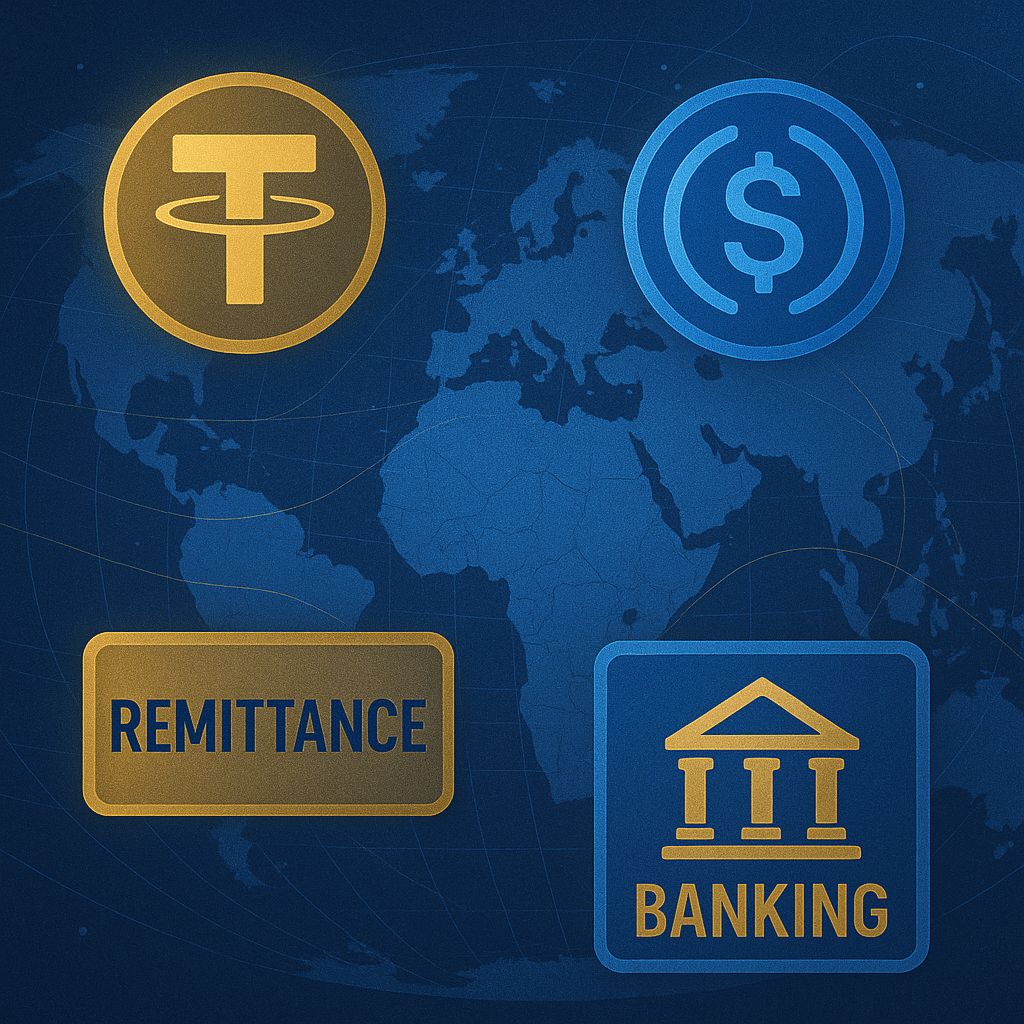
Stablecoins like USDT and USDC are becoming essential infrastructure. A leading remittance firm’s adoption of USDC enables cross-border payments with 70% lower fees and 24-hour settlement, revolutionizing a $1 trillion industry. A Guatemalan bank’s use of USDC for local transactions and USDT’s $216 billion in 24-hour trading volume highlight their dominance. Platforms are developing proprietary stablecoins to enhance DeFi efficiency, optimizing reserves for lending and trading.
Major banks are integrating stablecoins into traditional finance. One institution’s plan to accept crypto as lending collateral opens new avenues for stablecoin use, enabling borrowers to leverage USDT or USDC for loans. Tokenized real-world assets, with $500 million in locked value, rely on stablecoins for liquidity, positioning them as a backbone for DeFi and TradFi convergence. Stablecoins now account for 60% of DeFi transactions, with $200 billion in monthly volume, reflecting their critical role.
Regulatory Framework: Driving Trust
New legislation signed in July 2025 mandates 1:1 reserves for stablecoin issuers and clear licensing, enhancing the credibility of USDT and USDC. This framework, inspired by Hong Kong’s $50 billion licensed issuance model, limits Big Tech’s dominance, fostering competition. A proposed Senate bill clarifies crypto market structures, reducing barriers for financial institutions adopting stablecoins. The EU’s upcoming regulatory framework, set for 2026, aligns with these standards, promoting global adoption.
However, regulatory challenges remain. Pauses on certain ETF conversions signal caution, reflecting concerns about market stability. Bans on crypto payments in critical infrastructure, such as ransomware prevention measures, could limit stablecoin use in specific sectors. Overregulation of tokenized securities, including stablecoins, risks stifling innovation, potentially delaying mainstream adoption.
Historical Context: Stablecoin Evolution
Stablecoins emerged in 2014, growing to a $150 billion market by 2021. A major collapse in 2022, wiping out $40 billion, exposed vulnerabilities, leading to stricter regulations like the 2025 framework. The adoption of USDC by remittance giants and banks mirrors the 2023 launch of a major payment firm’s stablecoin, which reached $500 million in circulation. Stablecoins now represent 10% of the crypto market cap, with projections of $2 trillion by 2028, driven by their role in payments, DeFi, and tokenized assets.
Risks to Stablecoin Adoption
Scams are a significant threat, with $2.1 billion stolen in 2025, including a $3.4 million fraud involving a fake crypto scheme. Depegging risks, as seen in a 2023 USDC dip to $0.87, remain a concern, particularly during market stress. Regulatory uncertainty, such as skepticism around central bank digital currencies, could slow adoption. Macroeconomic factors, like a projected 0.25% Federal Reserve rate hike in August 2025, may reduce DeFi yields, impacting stablecoin profitability.
Investment Strategies for Stablecoins
Use USDT or USDC for trading stability on regulated platforms, compliant with new regulations. Stake stablecoins on DeFi platforms like Aave for 5–15% annual yields, ideal for risk-averse investors. Diversify with growth assets like Ethereum or Solana to balance stability and upside potential. Monitor regulatory developments through Cryptofeedhub’s newsletter for timely updates. Secure funds with hardware wallets like Ledger Nano to protect against scams.
Stablecoins’ Role in Tokenized Assets
Tokenized real-world assets, such as real estate and bonds, rely on stablecoins for liquidity. Platforms integrating $500 million in tokenized assets use USDC for seamless transactions, bridging traditional and decentralized markets. This trend could unlock $10 trillion in tokenized markets by 2030, with stablecoins as the primary medium of exchange.
The Future of Stablecoins
Stablecoins are poised to reach a $2 trillion market cap by 2028, driven by remittance adoption, banking integration, and regulatory clarity. Their role in DeFi, payments, and tokenized assets will solidify their place in global finance. However, scams, regulatory hurdles, and macro risks require vigilance. Subscribe to Cryptofeedhub for stablecoin updates, regulatory insights, and strategies to leverage this transformative asset class.

Stay Ahead of the Crypto Curve
For real-time updates and in-depth analysis, follow us on X (@CryptoFeedHub) and explore our full news archive at CryptoFeedHub.com.
Why follow us?
- 🔄 Breaking news alerts – Be first to know about market-moving events
- 📊 Expert analysis – Institutional-grade insights on trends and regulations
- 🚀 Exclusive content – Deep dives you won’t find anywhere else