
Synthesized from court documents, SEC filings, and Congressional records
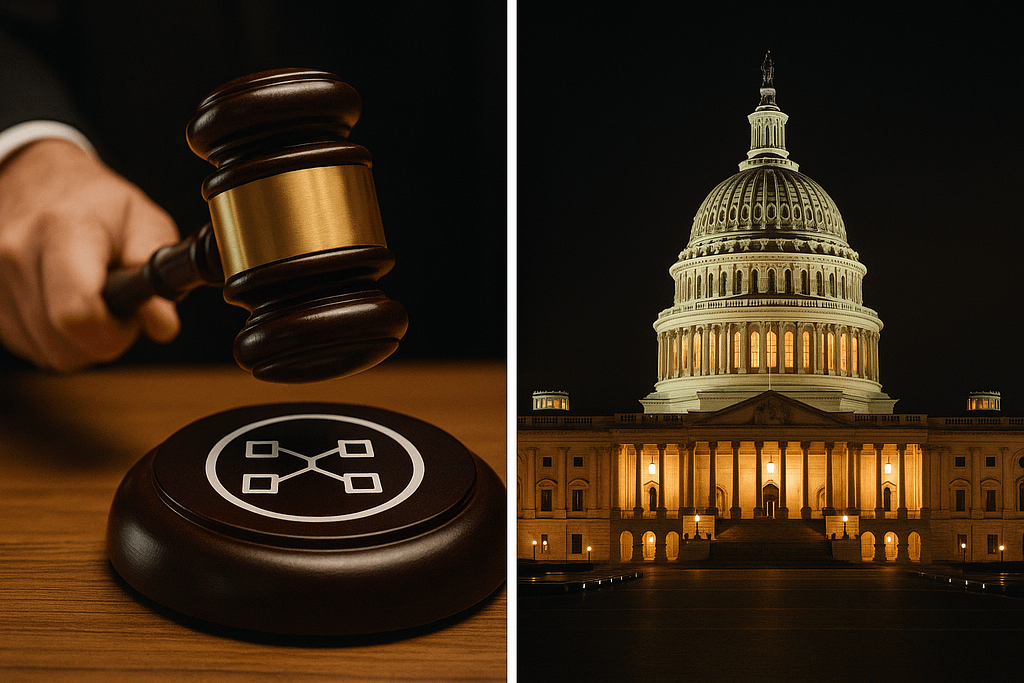
The U.S. legal system is grappling with crypto’s toughest questions as the Tornado Cash trial begins and regulators abruptly close high-profile investigations—all while Congress races to pass landmark legislation. These parallel developments are creating a watershed moment for blockchain’s legal framework.
In a Manhattan courtroom, 12 jurors will decide whether Tornado Cash developer Roman Storm violated money laundering laws by creating privacy tools used by criminals. The DOJ’s indictment alleges Storm “conspired to operate an unlicensed money transmitter,” while defense attorneys argue he merely published open-source code. Meanwhile, the CFTC and DOJ quietly closed their Polymarket investigations, signaling a potential shift in prediction-market enforcement.
“These cases will define what ‘illegal infrastructure’ means in crypto,” said Coin Center’s Neeraj Agrawal. The Polymarket resolution—coming just eight months after FBI agents raided CEO Shayne Coplan’s home—coincides with Congress preparing to vote on the CLARITY Act, which would exempt certain decentralized projects from securities laws.
Washington’s “Crypto Week” has turned into a political battleground. The House Freedom Caucus temporarily stalled votes on the GENIUS and CLARITY Acts, causing brief market jitters before a 5pm ET compromise. President Trump intervened via Truth Social, urging Republicans to support the bills to “keep America leading in blockchain innovation.”
Legal experts highlight the contradictions. “Polymarket gets cleared while Tornado Cash goes to trial—the inconsistency terrifies developers,” said Stanford Law’s David Sizemore. SEC Commissioner Hester Peirce criticized the “regulation by enforcement” approach, noting that 14 crypto-related cases were dropped since 2024 without clear guidelines.
The international landscape adds complexity. While the U.S. debates the GENIUS Act, the EU’s MiCA now requires stablecoin issuers to hold 60% of reserves in cash—stricter than American proposals. Singapore and Dubai are exploiting the uncertainty, offering “safe harbor” testing environments for DeFi projects.
Key Takeaway: From courtrooms to Congress, crypto’s legal future hinges on balancing innovation and accountability—with developers, regulators, and politicians all struggling to define where the lines should be drawn.
Stay Ahead of the Crypto Curve
For real-time updates and in-depth analysis, follow us on X (@CryptoFeedHub) and explore our full news archive at CryptoFeedHub.com.
Why follow us?
- 🔄 Breaking news alerts – Be first to know about market-moving events
- 📊 Expert analysis – Institutional-grade insights on trends and regulations
- 🚀 Exclusive content – Deep dives you won’t find anywhere else