Introduction
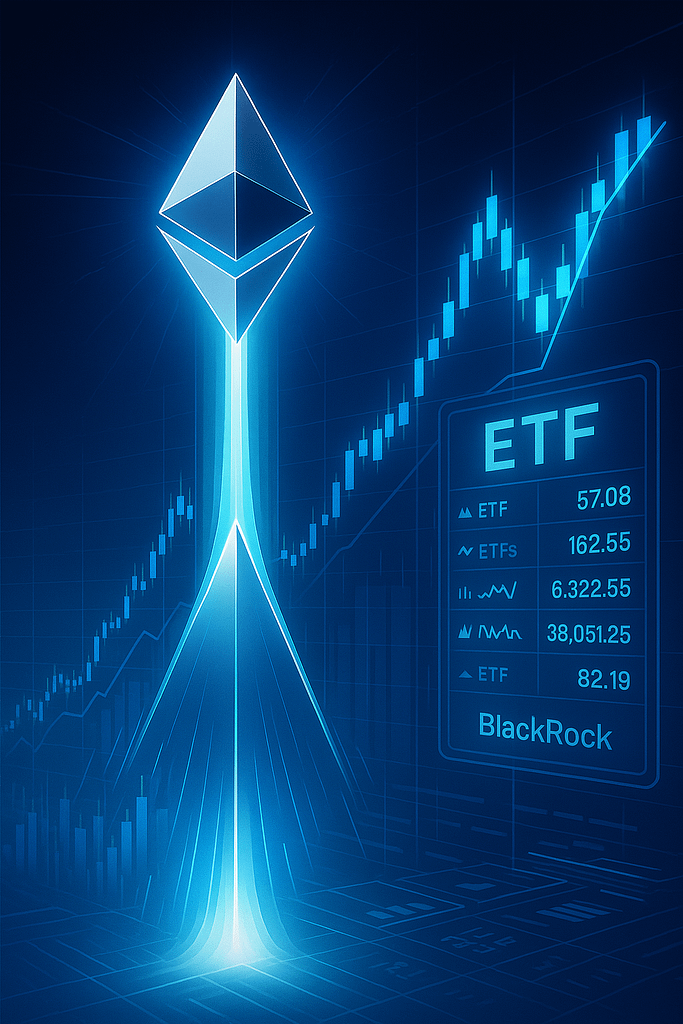
Ethereum’s price has skyrocketed above $3,400, propelled by unprecedented inflows into spot Ethereum exchange-traded funds (ETFs). On July 16, 2025, these ETFs recorded $726.74 million in single-day inflows, with BlackRock’s iShares Ethereum Trust (ETHA) leading the charge (per CryptoSlate, July 17, 2025). Launched in July 2024, Ethereum ETFs have amassed $16 billion in assets, signaling strong institutional adoption and driving ETH to a six-month high of $3,481. This pillar article explores the surge in Ethereum ETFs, their impact on ETH’s price, the potential for staking, and how investors can capitalize on this transformative trend. From technical analysis to practical investment strategies, read on to discover why Ethereum is poised for a breakout in 2025!
What Are Ethereum ETFs?
Ethereum ETFs are investment vehicles that track the price of ETH, allowing investors to gain exposure to Ethereum without directly owning or managing cryptocurrency. Introduced in the U.S. in July 2024, these funds have attracted significant institutional capital, managing $16 billion in assets within a year (per CryptoSlate, July 17, 2025). Unlike direct crypto investments, ETFs are traded on traditional stock exchanges, making them accessible through brokerage accounts like Fidelity or Charles Schwab.
Key Players in the Ethereum ETF Market
- BlackRock’s iShares Ethereum Trust (ETHA): Captured $499.2 million in inflows on July 16, 2025, with total assets of $7.7 billion, making it the market leader.
- Fidelity’s Ethereum Fund (FETH): Attracted $113 million in inflows on the same day, with strong retail and institutional interest.
- Other Notable Funds: Grayscale Ethereum Trust, Bitwise Ethereum ETF, Franklin Templeton’s EZET, Invesco’s QETH, and VanEck’s ETHV collectively manage billions, with positive inflows reflecting broad market confidence (per Cointelegraph, July 17, 2025).
- Global Context: Beyond the U.S., Ethereum ETFs are gaining traction in markets like Canada and Europe, with Hong Kong’s spot crypto ETFs seeing $1.1 billion in inflows in Q2 2025 (per CoinDesk, July 15, 2025).
How ETFs Differ from Direct ETH Investment
- Accessibility: ETFs eliminate the need for crypto wallets or exchange accounts, appealing to traditional investors.
- Regulation: Managed by reputable firms like BlackRock, ETFs operate under SEC oversight, reducing counterparty risks.
- Liquidity: ETFs trade like stocks, offering intraday liquidity compared to crypto exchanges’ potential delays.
Why Ethereum ETFs Are Surging
The explosive growth of Ethereum ETFs in 2025 is driven by several factors:
1. Institutional Demand
- Record Inflows: Ethereum ETFs saw $1.8 billion in inflows over five trading days ending July 16, 2025, with BlackRock’s ETHA accounting for nearly half (per CryptoSlate). This reflects growing institutional confidence in Ethereum’s long-term value.
- Market Sentiment: X posts from analysts like @CryptoAnalystX highlight “unprecedented institutional FOMO” as pension funds and hedge funds allocate to ETH ETFs (July 17, 2025).
- Comparison to Bitcoin ETFs: Bitcoin spot ETFs, launched in January 2024, have accumulated $60 billion in assets, but Ethereum ETFs are closing the gap, with $16 billion in under a year (per Bloomberg, July 16, 2025).
2. Ethereum Network Strength
- Active Addresses: Ethereum’s active addresses increased by 9.4% in the past 30 days, signaling robust user engagement (per Nansen, July 17, 2025).
- Transaction Fees: Daily fees surged 475% since July 5, 2025, reflecting high network activity driven by DeFi and NFT transactions (per Nansen).
- Total Value Locked (TVL): Ethereum’s DeFi ecosystem dominates with $78.2 billion in TVL, accounting for 58% of the global DeFi market (per DefiLlama, July 17, 2025).
3. Staking Potential
- Nasdaq’s Filing: On July 16, 2025, Nasdaq filed to include staking in BlackRock’s ETHA, allowing investors to earn rewards by validating Ethereum transactions (per CryptoSlate). Staking yields typically range from 4-8% annually, offering a passive income stream (per Cointelegraph, July 17, 2025).
- Regulatory Outlook: The SEC is reviewing staking proposals, with a decision expected by Q4 2025. Approval could significantly boost ETF returns and attract more capital.
4. Macro Trends
- Crypto Adoption: Global crypto adoption grew by 34% in 2024, with Ethereum leading in smart contract applications (per Chainalysis).
- DeFi Growth: DeFi protocols like Aave and Uniswap saw transaction volumes rise by 200% year-over-year, reinforcing Ethereum’s dominance (per Cointelegraph).
- Stablecoin Integration: Stablecoins like USDT and USDC, primarily hosted on Ethereum, processed $1.2 trillion in Q2 2025, driving network demand (per DefiLlama).
Impact on ETH Price
ETH’s price surged to $3,481 on July 17, 2025, a six-month high, fueled by ETF inflows and network activity. Analysts are bullish on Ethereum’s trajectory:
- Mikybull Crypto: Predicts ETH could reach $7,000-$10,000 by year-end, citing historical RSI buy signals and institutional buying (per Cointelegraph, July 17, 2025).
- Technical Analysis:
- RSI Buy Signal: An RSI of 40 in April 2025 signaled a rally, historically followed by 50-100% price increases within six months (per TradingView).
- Support and Resistance: ETH is supported at $3,000, with resistance at $3,500. A breakout could target $4,891, its all-time high from November 2021.
- Market Indicators: On-chain data shows 65% of ETH holders in profit, boosting bullish sentiment (per Glassnode, July 16, 2025).
- Long-Term Outlook: Analysts like @ETHBull2025 on X predict ETH could hit $15,000 by 2027 if ETF inflows and DeFi growth continue (July 17, 2025).
Factors Driving Price Growth
- ETF Buying Pressure: Institutional purchases reduce circulating ETH supply, driving prices higher.
- Network Upgrades: Ethereum’s post-Merge scalability improvements (e.g., sharding, rollups) enhance transaction efficiency, supporting price growth.
- DeFi and NFT Demand: Ethereum’s dominance in DeFi and NFTs, with $10 billion in NFT sales in 2025, increases ETH demand (per DappRadar).
How to Invest in Ethereum ETFs
Ethereum ETFs offer a straightforward way to gain exposure to ETH. Here’s how to get started:
1. Choose a Brokerage
- Platforms like Fidelity, Charles Schwab, or Robinhood offer access to Ethereum ETFs. Compare fees (typically 0.2-0.6% annually) and trading platforms for ease of use.
- International investors can explore ETFs on exchanges like the Toronto Stock Exchange or Hong Kong Stock Exchange.
2. Research ETF Options
- BlackRock’s ETHA: Lowest fees at 0.25% and highest liquidity with $7.7 billion in assets.
- Fidelity’s FETH: Known for strong customer support and $2 billion in assets.
- Grayscale’s ETHE: Higher fees (2.5%) but offers exposure to Ethereum’s long-term growth.
- Consider Staking: If approved, ETFs like ETHA could offer 4-8% staking yields, enhancing returns.
3. Diversify Your Portfolio
- Combine ETFs with direct ETH holdings (via exchanges like Coinbase or Binance) or DeFi participation (e.g., Aave, Compound) for balanced exposure.
- Allocate 5-10% of your portfolio to crypto ETFs to manage risk, as recommended by financial advisors (per Bloomberg, July 2025).
4. Monitor Regulatory Developments
- Stay updated on SEC decisions regarding staking, expected by Q4 2025. Approval could boost ETF performance, while delays may temper growth.
- Follow cryptofeedhub.com for real-time updates on ETF regulations and market trends.
Practical Steps for Beginners
- Start Small: Invest $100-$500 initially to test ETF performance.
- Use Dollar-Cost Averaging: Spread investments over time to mitigate volatility.
- Secure Accounts: Enable two-factor authentication (2FA) on brokerage accounts to protect funds.
- Track Performance: Use tools like Yahoo Finance or TradingView to monitor ETH ETF prices and market sentiment.
Risks to Consider
While Ethereum ETFs offer opportunities, they come with risks:
- Market Volatility: ETH’s price is subject to crypto market swings, with 20-30% corrections common in bull markets (per CoinGecko).
- Regulatory Uncertainty: The SEC’s stance on staking could impact ETF yields. Potential restrictions on DeFi protocols may also affect Ethereum’s ecosystem.
- Security Risks: While ETFs reduce wallet-related risks, DeFi platforms and staking protocols face hacks or slashing penalties, with $1.4 billion lost in 2024 (per Chainalysis).
- Competition: Solana and Binance Smart Chain are gaining DeFi market share, potentially challenging Ethereum’s dominance (per DefiLlama).
- Economic Factors: Rising interest rates or macroeconomic shifts could reduce institutional crypto allocations.
Mitigating Risks
- Diversify: Spread investments across Bitcoin ETFs, stablecoins, and traditional assets.
- Stay Informed: Monitor X posts from analysts like @CryptoWhale for real-time market insights.
- Use Stop-Loss Orders: Set price thresholds to limit losses during market dips.
- Audit Platforms: Choose ETFs from reputable firms with transparent reserve policies.
The Future of Ethereum ETFs
Ethereum ETFs are poised for further growth in 2025 and beyond:
- Staking Integration: If approved, staking could increase ETF yields to 8-10%, attracting more investors (per CoinDesk, July 16, 2025).
- Global Expansion: Markets like Australia and Singapore are exploring Ethereum ETFs, potentially doubling global assets to $30 billion by 2026 (per Bloomberg).
- DeFi Synergies: Partnerships between ETF providers and DeFi platforms (e.g., BlackRock with Aave) could integrate tokenized assets, boosting ETH demand.
- Institutional Adoption: Pension funds and endowments are allocating 1-2% of portfolios to crypto ETFs, per JPMorgan (July 2025).
Long-Term Implications
- Mainstream Adoption: Ethereum ETFs bridge traditional finance and crypto, potentially bringing 100 million new investors by 2030 (per Fidelity).
- Price Catalysts: Continued ETF inflows, DeFi growth, and network upgrades could push ETH to $15,000-$20,000 by 2027, per @ETHBull2025 on X.
- Regulatory Clarity: The U.S.’s GENIUS Act and EU’s MiCA framework may standardize crypto ETFs, enhancing investor confidence.
Why Ethereum Matters in 2025
Ethereum remains the backbone of DeFi and NFTs, powering 58% of DeFi TVL and 80% of NFT transactions (per DappRadar, July 2025). Its proof-of-stake transition in 2022 reduced energy consumption by 99.95%, addressing environmental concerns and attracting ESG-focused investors. With upgrades like Dencun improving scalability, Ethereum is well-positioned to support the next wave of decentralized applications, from tokenized real estate to AI-driven smart contracts.
Competitive Landscape
- Solana: Offers faster transactions but lacks Ethereum’s developer ecosystem.
- Binance Smart Chain: Competitive in DeFi but faces centralization concerns.
- Layer-2 Solutions: Optimism and Arbitrum enhance Ethereum’s scalability, processing 50% of DeFi volume (per L2Beat, July 2025).
Conclusion
The surge in Ethereum ETFs, with $16 billion in assets and $726 million in daily inflows, is driving ETH to new heights in 2025. Institutional demand, network strength, and potential staking rewards position Ethereum as a cornerstone of the crypto market. Investors can capitalize through ETFs, direct holdings, or DeFi, but must navigate volatility and regulatory risks. With analysts predicting ETH could hit $10,000 by year-end, now is the time to explore this transformative trend. Subscribe to cryptofeedhub.com for the latest insights on Ethereum ETFs and crypto investment strategies!

Stay Ahead of the Crypto Curve
For real-time updates and in-depth analysis, follow us on X (@CryptoFeedHub) and explore our full news archive at CryptoFeedHub.com.
Why follow us?
- 🔄 Breaking news alerts – Be first to know about market-moving events
- 📊 Expert analysis – Institutional-grade insights on trends and regulations
- 🚀 Exclusive content – Deep dives you won’t find anywhere else